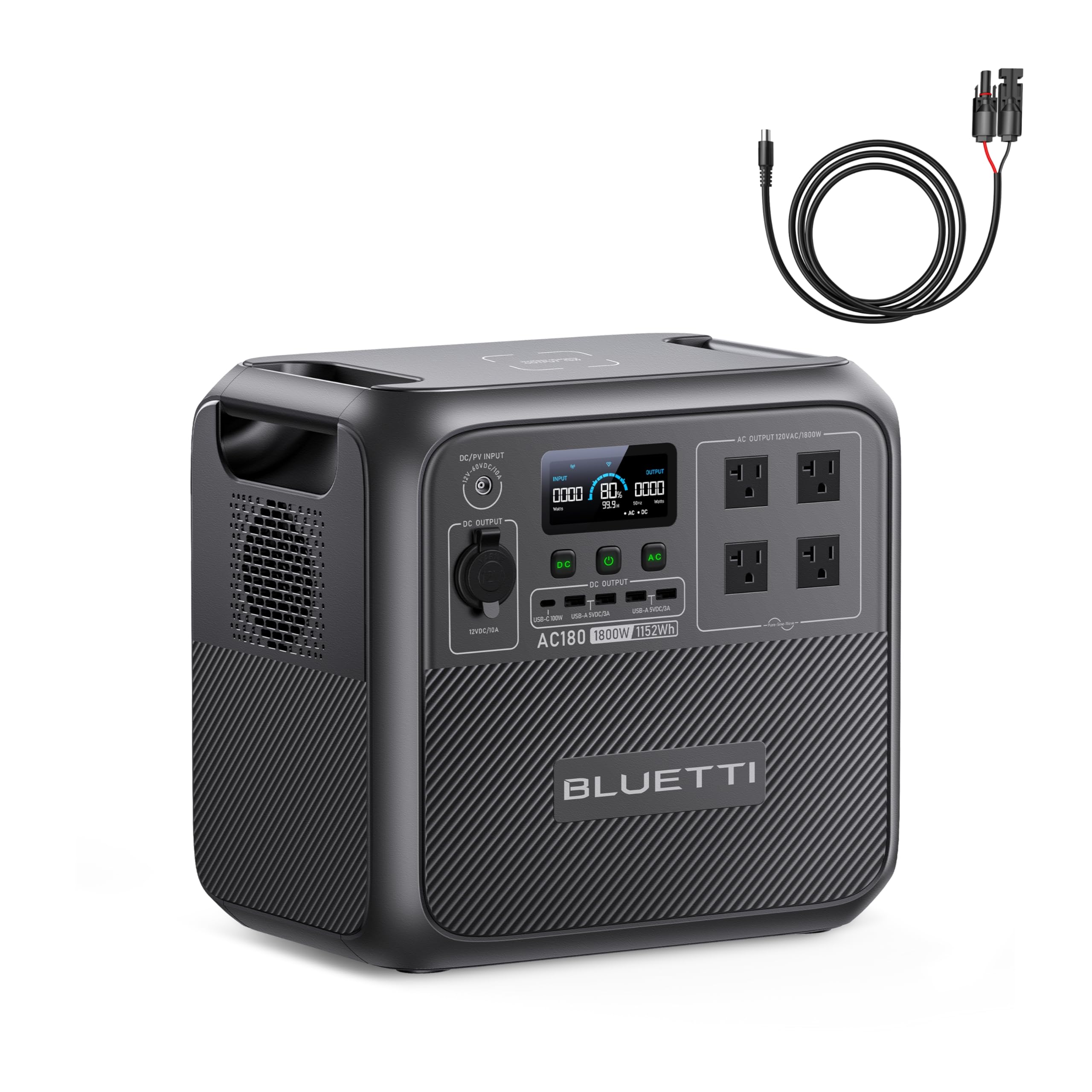
The BLUETTI AC180 is a portable power station built around a 1,152Wh LiFePO4 battery, 1,800W AC output, and several ways to recharge.
This bluetti solar generator ac180 review looks at its balance of capacity, charging speed, and portability for camping and backup use.
BLUETTI AC180 Review Summary
The quick verdict
2,000+ ratings
Read Amazon ReviewsBLUETTI AC180
A capable fit for campers and households seeking substantial portable battery capacity, quick AC charging, and backup power for essential devices.
- 1,152Wh LiFePO4 battery capacity in a portable power station.
- 1,800W AC output, with an app-enabled boost option up to 2,700W.
- Four AC outlets are identified in the product title; the supplied description also lists 11 outlets in total.
- AC charging input up to 1,440W, with a stated full recharge time of about one hour.

Pros
- A 1,152Wh battery offers more reserve than compact power stations intended mainly for phones and small electronics.
- Fast AC charging can reduce the time the station needs to remain plugged in between uses.
Consider before buying
- The 500W maximum solar input means solar recharge speed depends on both available sunlight and the panel setup; it is not an unlimited off-grid energy source.
- The 2,700W boost requires using the BLUETTI app, adding a setup step when a device needs that mode.
Read the full review summary
The AC180’s appeal is its mix of meaningful battery capacity and a relatively high output rating in one portable station.
It can recharge from AC input at up to 1,440W, accept up to 500W of solar input through its built-in MPPT controller, and provide emergency power to essentials with a listed 20ms UPS transfer time.
That combination makes it a flexible option for planned trips and short interruptions at home.
It is best suited to people who want to run or recharge several everyday devices and appliances, while keeping expectations aligned with a 1,152Wh battery. Actual runtime depends on what is connected and how much power it draws.
The 2,700W boost is app-enabled, so buyers should check that the devices they want to run are compatible with the unit’s standard output or its boosted mode.
The buying factors
BLUETTI AC180 Scorecard
Editorial scores reflect listed features and buyer fit; they are not laboratory measurements or customer ratings.
Battery capacity
The 1,152Wh capacity gives the AC180 a substantial reserve for a portable station, though high-draw equipment will use that energy quickly.
AC output
Rated at 1,800W, with an app-enabled boost to 2,700W for higher demands; buyers should verify appliance requirements before relying on boost mode.
AC recharge speed
The supplied specifications describe a full charge in about one hour at 1,440W AC input, a useful advantage when turnaround time matters.
Solar charging flexibility
The built-in MPPT controller accepts up to 500W solar input, with a stated full-charge window of 2.8–3.3 hours under suitable conditions.
Backup response
A listed 20ms UPS response can help bridge interruptions for essentials, but buyers should confirm that timing and setup suit sensitive equipment.
Use-case flexibility
The combination of AC, solar, and car charging support gives it options for home, camping, and travel use.
Key Features and Specifications of BLUETTI AC180
- 1,152Wh LiFePO4 battery capacity in a portable power station.
- 1,800W AC output, with an app-enabled boost option up to 2,700W.
- Four AC outlets are identified in the product title; the supplied description also lists 11 outlets in total.
- AC charging input up to 1,440W, with a stated full recharge time of about one hour.
- Built-in MPPT controller supports up to 500W solar input; the supplied solar full-charge estimate is 2.8–3.3 hours.
- Listed 20ms UPS transfer for emergency power to essential devices.
- Includes AC, car, and solar charging cables, plus a user manual.
Pros and Cons of BLUETTI AC180
Pros
- A 1,152Wh battery offers more reserve than compact power stations intended mainly for phones and small electronics.
- Fast AC charging can reduce the time the station needs to remain plugged in between uses.
- Solar and car charging add flexibility when a wall outlet is unavailable.
- The 1,800W rated output and higher app-enabled boost broaden the range of loads buyers may be able to consider.
Consider before buying
- The 500W maximum solar input means solar recharge speed depends on both available sunlight and the panel setup; it is not an unlimited off-grid energy source.
- The 2,700W boost requires using the BLUETTI app, adding a setup step when a device needs that mode.
- A 1,152Wh battery still requires load planning for extended outages or multiple high-draw appliances; runtime will vary with use.
Who Should Buy BLUETTI AC180?
Good fit
Consider the AC180 if you want one station for camping and home backup, and value fast wall charging alongside solar and car charging options.
Its capacity and output make it more versatile than a small electronics-only power bank, while remaining a battery-based option for portable use.
It may also suit households that want temporary power for selected essentials during an interruption.
Before buying for a particular appliance, check the appliance’s running and startup demands against the station’s rated output and boost mode, and consider how long you need it to run.
Who should skip it
Skip it if your priority is long-duration backup for several high-power appliances without recharging. The available battery capacity is finite, and the listed solar input is capped at 500W, so sustained loads require careful energy planning.
It may be a poor fit if you need a simple setup with no app involvement for every operating mode. The higher output boost is app-enabled, so check how you would configure it before depending on that feature.
What the BLUETTI AC180’s Capacity and Charging Mean in Practice
Capacity sets the runtime ceiling
At 1,152Wh, the AC180 has useful energy storage for portable use and selected backup needs.
Capacity alone does not determine how long a device will run: a low-power router and a high-draw kitchen appliance place very different demands on the battery.
List the devices you expect to power, estimate their combined draw and desired runtime, and leave room for conversion losses and changing conditions.
Fast AC charging helps between trips
The supplied details give a full-charge time of about one hour at 1,440W AC input.
That can be practical when the station comes back from a trip or sees use between outages, because recharge time is part of the ownership routine.
The figure depends on the stated input conditions, so buyers should confirm the charging mode and settings they intend to use.
Solar input supports planned off-grid use
The built-in MPPT controller accepts up to 500W of solar input, and the supplied estimate for a full solar recharge is 2.8–3.3 hours.
Treat that as a best-case planning reference rather than a guaranteed daily result: sunlight, panel orientation, and weather affect collection.
The solar cable is included, but check panel compatibility and the equipment required for your setup before building a camping or backup plan around solar.
UPS timing deserves a use-case check
A listed 20ms UPS transfer time is intended to provide emergency power to essentials when household power is interrupted.
That may be useful for equipment such as a router, but the right choice depends on how sensitive your devices are to a brief interruption.
Check the equipment maker’s requirements and test your intended arrangement before relying on it for a critical load.
Alternatives to BLUETTI AC180
Outdoor Generators alternative
1,000+ ratings
Read Amazon ReviewsBLUETTI Elite 100 V2
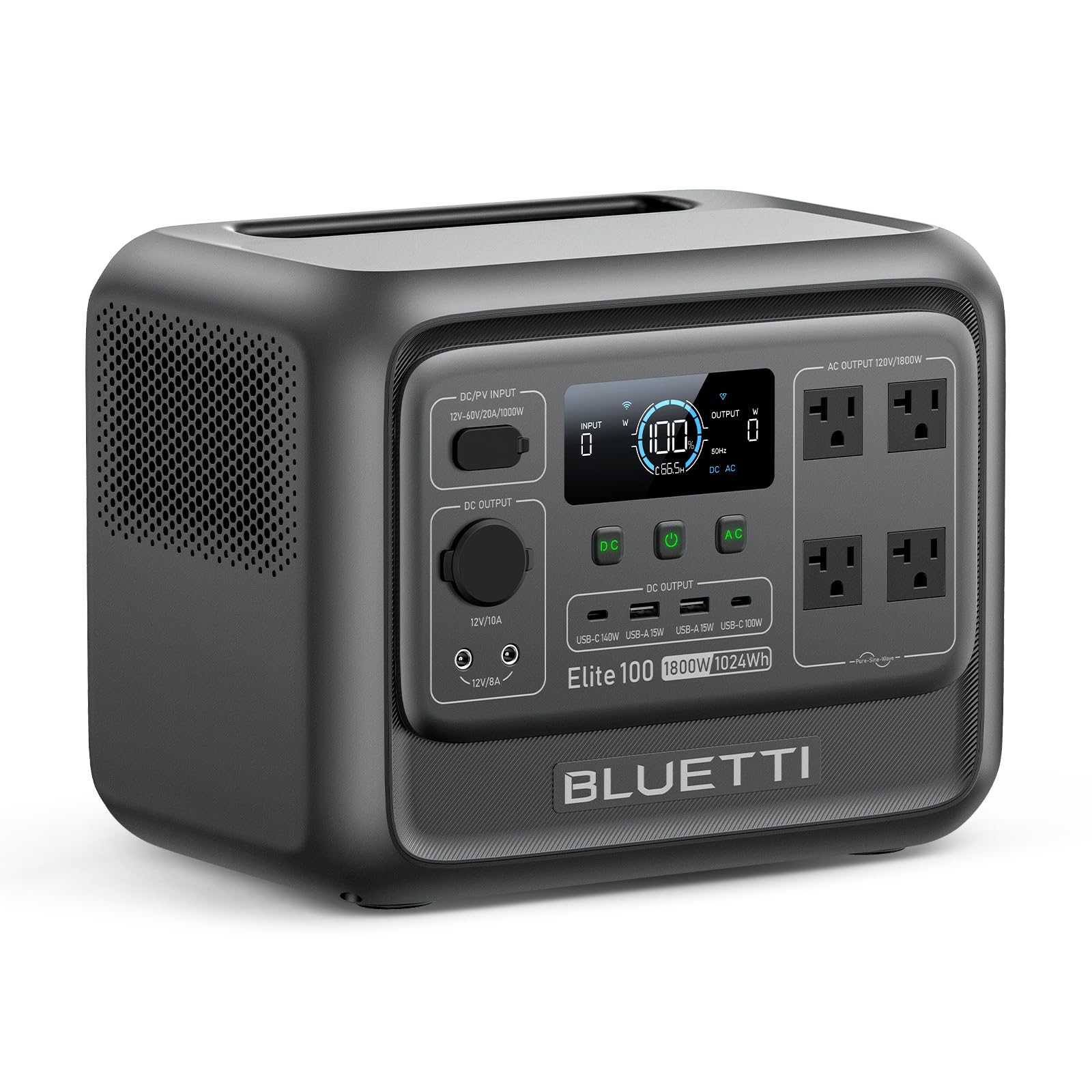
Choose the Elite 100 V2 if its faster specified UPS transfer, 80% recharge time, and listed 25-pound weight better match your priorities.
The AC180 offers a little more stated battery capacity and a 500W solar-input figure; compare the charging and backup details that matter most to your use.
- The Elite 100 V2 is specified with 1,024Wh capacity, 1,800W rated output, up to 2,700W power lifting, 10ms UPS backup, and a stated 45-minute charge to 80% via 1,200W AC charging.
- Its listed weight is 25 pounds.
- The AC180 combines 1,152Wh capacity with 1,800W rated output, up to 500W solar input, and a listed 20ms UPS transfer.
Battery-focused alternative
900+ ratings
Read Amazon ReviewsBLUETTI Elite 200 V2
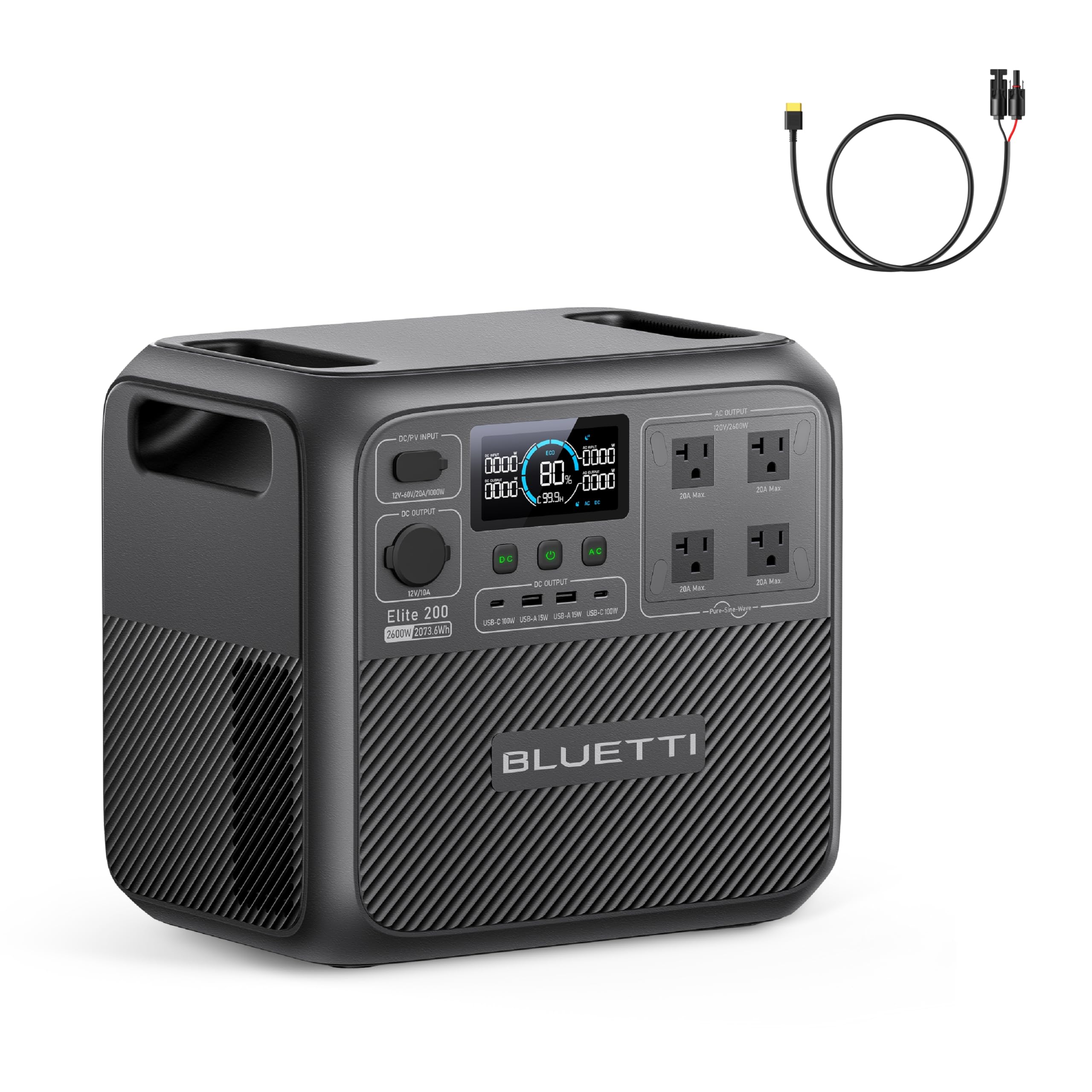
Consider the Elite 200 V2 if you need substantially more stored energy and higher continuous output and can accommodate its heavier form.
The AC180 is the more modest capacity choice; it may be easier to justify when your loads and desired runtime do not call for the larger station.
- The Elite 200 V2 has 2,073.6Wh capacity and 2,600W continuous output, with a stated 3,900W power-lifting mode.
- Its details list 50-pound-plus weight, 0–80% charging in 50 minutes using dual AC and DC input, and a full solar charge in 2.4 hours with 1,000W panels.
- The AC180 is a 1,152Wh, 1,800W station with a listed 20ms UPS transfer and up to 500W solar input.
Is BLUETTI AC180 Worth It?
The BLUETTI AC180 is worth considering if you want a portable station with a substantial 1,152Wh battery, 1,800W rated output, fast AC recharge, and the flexibility to charge from solar or a vehicle.
Its feature mix suits camping and backup for selected household essentials.
Buy it with a clear plan for your loads and runtime.
The 500W solar-input ceiling and finite battery capacity matter for extended off-grid use, while the app-enabled boost and listed UPS timing deserve a check against your particular devices.
If those tradeoffs fit, the AC180 is a well-rounded candidate for portable power.
Your review at a glance
2,000+ ratings
Read Amazon ReviewsBLUETTI AC180
A capable fit for campers and households seeking substantial portable battery capacity, quick AC charging, and backup power for essential devices.
- 1,152Wh LiFePO4 battery capacity in a portable power station.
- 1,800W AC output, with an app-enabled boost option up to 2,700W.
- Four AC outlets are identified in the product title; the supplied description also lists 11 outlets in total.
- AC charging input up to 1,440W, with a stated full recharge time of about one hour.